North vs South Lanzarote: Why the Island Feels Divided
To arrive in Lanzarote is to encounter a landscape that feels less like a traditional island and more like a carefully preserved volcanic gallery. For the British traveller, whose coastal experiences often involve the soft greens of the UK, Lanzarote offers a striking, obsidian-black contrast. However, the island’s most fascinating feature is its geographical divide. While the south is a sun-bleached sanctuary of golden sands and calm turquoise waters, the north is a wilder, wind-whipped world of emerald cliffs and ancient lava caves. Understanding this “split personality” is the key to discovering the full, complex spectrum of the Canaries.
Many travellers begin their planning by searching for Lanzarote holidays to secure a gateway to the island’s legendary year-round warmth. While the pursuit of the last minute holiday deals provides a practical entry point, the true value of Lanzarote is found in its topographical contrast. Choosing a base on one side of the island doesn’t mean you have to stay there; the most rewarding trips are those that embrace the shift from the arid, lunar plains of the south to the fertile, high-altitude ridges of the north.
Successfully navigating this island of contrasts calls for planning that acknowledges Lanzarote’s varied terrain and shifting microclimates. Lanzarote holidays often move between relaxed coastal living and stark volcanic drama, yet the transition from the whitewashed calm of Playa Blanca to the wind-carved heights of the Famara cliffs is more than scenic it is atmospheric. For travellers refining how to structure that movement, Travelodeal can serve as a practical reference point when comparing itineraries that balance seaside ease with inland exploration, ensuring that each shift in landscape feels intentional rather than rushed. As you pass through the “Valley of a Thousand Palms” in Haría toward the island’s northern edge, the coastal tempo softens, replaced by a quieter connection to a terrain where lava fields, ocean horizons, and changing light create a new perspective around every bend.
The South: The Sun-Drenched Frontier
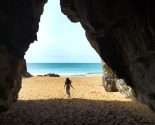
The south of Lanzarote is defined by its shelter and its heat. Protected from the northern trade winds by the central mountain range, areas like Papagayo and Playa Blanca offer the quintessential “summer” experience. This is the Lanzarote of the calm lagoon and the golden dune, where the Atlantic feels more like a swimming pool than an ocean. It is a landscape designed for effortless relaxation, where the volcanic soil is at its most stark and the horizon is a shimmering line of heat.
The North: The Emerald Heights
In contrast, the north of Lanzarote is where the island’s traditional and artistic heart resides. Fed by the moisture of the Atlantic mist, this region is surprisingly green and lush. The town of Haría, nestled in a volcanic crater, offers a look at the island’s colonial past, with its palm-filled valleys and quiet plazas. The beaches here, such as the Famara stretch, are dramatic and powerful, favored by surfers and those who seek the raw energy of the open sea. This is the “wild” Lanzarote, where the mist often rolls off the Risco de Famara, creating an atmosphere of prehistoric mystery.
The Artistic Bridge: César Manrique
The literal and metaphorical bridge between the two halves of the island is the legacy of artist César Manrique. From the Jameos del Agua in the north to the Timanfaya National Park in the center, Manrique’s influence ensured that the island’s development worked with the geography rather than against it. Exploring his creations allows you to see how the island’s vertical and horizontal beauty can be merged, providing an intellectual and sensory experience that unites the arid south with the lush north.
A Culinary Tale of Two Coasts
Lanzarote’s geography has even shaped its culinary identity. In the south, the focus is on fresh Atlantic catch and the famous “wrinkled” potatoes (papas arrugadas). In the north, particularly in the La Geria wine region, the geography dictated a unique way of farming. Here, vines are grown in individual craters dug into the black ash, protected by stone walls. Engaging in a wine tasting in this lunar landscape is a primary social ritual, providing a sensory link to the resilience of the island’s people and the specific flavors of the volcanic soil.